Inside a California Barrel Race: Family, Horses and Life Beyond the Arena

Horse shows are about much more than what happens inside the arena. A day at a local barrel race in Petaluma, California, revealed the routines, relationships, equipment and community that make up everyday equestrian life.
At first, the arena gets your attention. A horse enters at speed. Rider and horse approach the first barrel together, turn tightly, accelerate toward the next one and, within seconds, the run is over.
But spend a little more time at a local barrel racing event and something else becomes apparent: the competition is only a small part of the day.
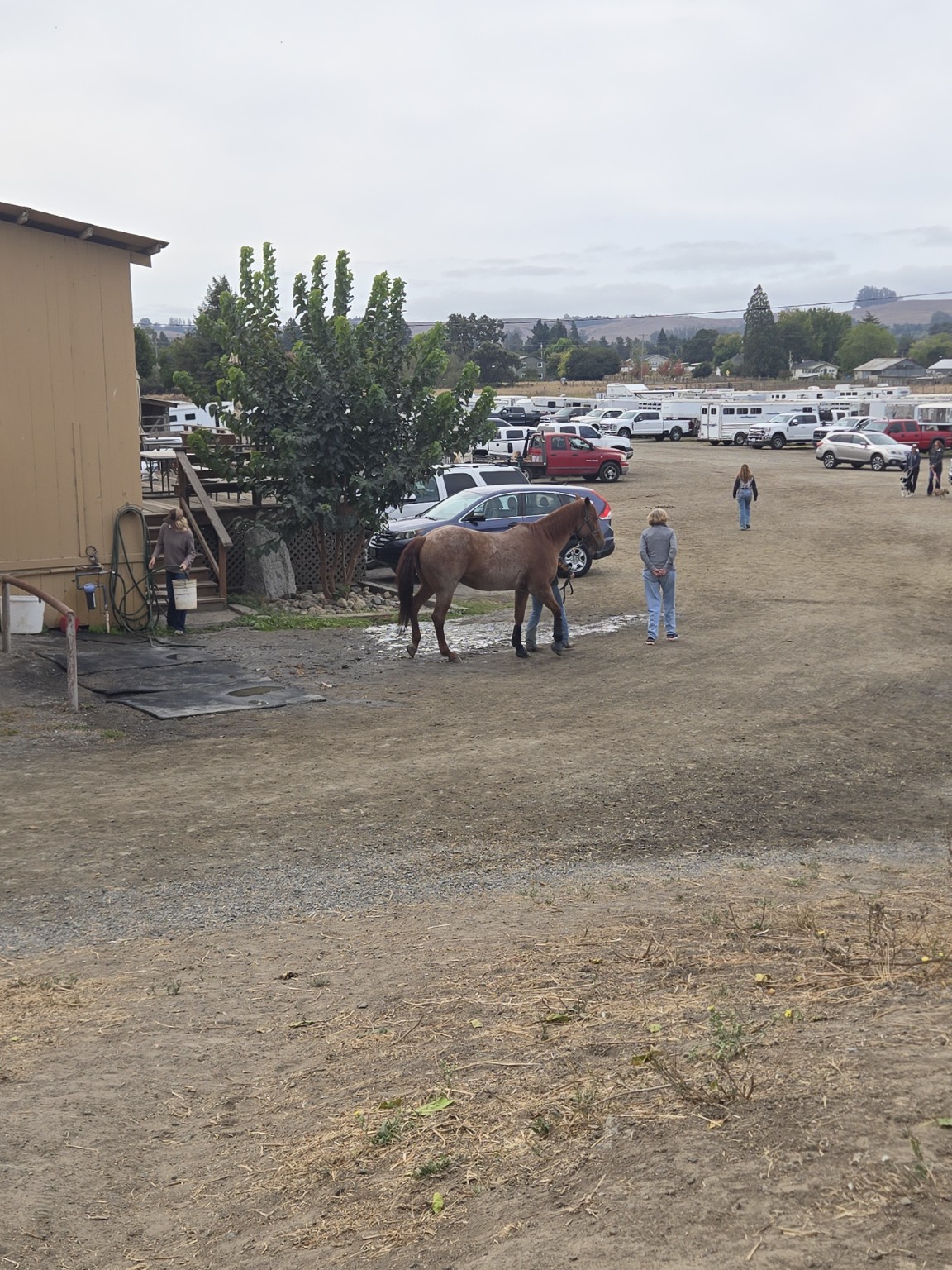
At a recent barrel race in Petaluma, California, HORSEKIN spent time observing what happens around the arena — where horses wait, families prepare, riders organize equipment and the everyday rhythm of equestrian life unfolds.
Barrel Racing Is Built on Preparation
A barrel racing run may last only seconds, but the preparation surrounding it can take hours. Horses need to be transported, groomed, tacked, warmed up and cared for throughout the day. Riders move constantly between trailers, horses, equipment and the arena.
The public sees the speed. Behind it is organization, repetition and preparation.
The Horse Show Beyond the Arena
Petaluma offered another side of equestrian culture that is easy to miss online. There was mud. There were trucks and trailers. Children and families moved around the grounds. Horses waited while people talked, worked and prepared for their turn.
It wasn't an artificially polished version of equestrian life. It was real equestrian life.
And that matters to HORSEKIN. Understanding horses also means understanding the environment surrounding them — the routines, equipment, people and small problems that riders encounter repeatedly.
Children, Families and a Culture Passed Forward
Before the main competition, children had their own moment in the arena. The excitement wasn't limited to the young riders. Parents watched, encouraged and celebrated from the sidelines, turning the competition into something larger than a race.
It was a glimpse of how equestrian culture is passed forward — not only through riding lessons, but through families, shared experiences and a sense of belonging.
Children watch. They help. They wait beside horses. They learn routines and gradually become part of a world that existed before them.
Some of the most important moments in equestrian life happen outside the arena.
What Equipment Tells Us About Equestrian Life
One particularly interesting part of observing a horse show is seeing how people organize their equipment. Grooming supplies have to move. Brushes, sprays, hoof-care products, towels and countless smaller items need to travel from home or barn to trailer, stall or preparation area — and remain accessible once they arrive.
That raises an interesting design question: Could equestrian equipment move more naturally with the rider instead of constantly being transferred from one container or location to another?
It is one of the questions HORSEKIN is exploring as we study everyday equestrian routines.
What HORSEKIN Is Looking For
HORSEKIN was created around a simple idea: better equestrian products and stories begin by paying attention to real equestrian life.
That means spending time outside the arena as well as inside it. Watching how riders work. Seeing how equipment is actually used. Listening to the frustrations that seem small but happen repeatedly. And understanding the relationship between horse, human and environment.
Because sometimes the most interesting part of a horse show happens before the horse ever enters the arena.
HORSEKIN — Made for the life around horses.
Comments